
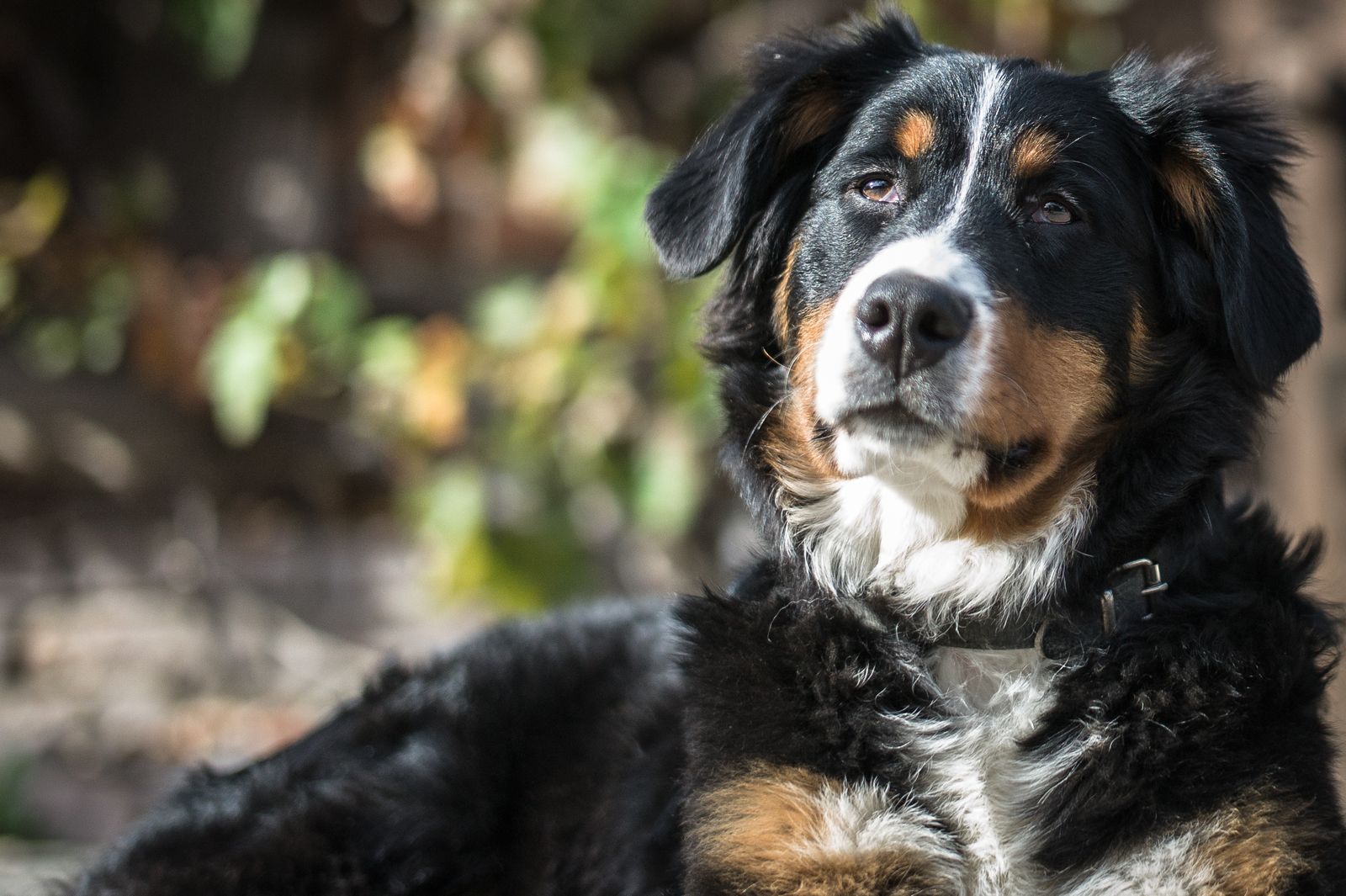
Take two of the friendliest large breeds in the dog world, the Bernese Mountain Dog and the Golden Retriever, cross them, and you get a puppy that seems designed to be a family favourite. The result is commonly called the Golden Mountain Dog, also known as the Bernese Golden Mountain Dog or the Golden Bernese. It is big, fluffy, affectionate and usually easygoing, but it is also a demanding dog in terms of space, grooming and health planning.
This guide covers what to expect from a Bernese Mountain Dog Golden Retriever mix: size, looks, temperament, exercise, training, grooming, health, lifespan and costs to think about, plus how to find a responsible breeder or rescue. Remember that a mixed-breed dog is a bundle of possibilities: puppies from the same litter can differ noticeably, so treat any breed description as a probability, not a promise.
What Is a Golden Mountain Dog?
A Golden Mountain Dog is a cross between a Golden Retriever and a Bernese Mountain Dog. Dogster describes it as combining the most desirable traits of both parents, a gentle giant that is loyal, affectionate and easygoing. Dogtime calls it a large-to-giant crossbreed. It is a “designer” crossbreed rather than a recognised breed, so there is no official breed standard, and appearance and temperament vary.
The parents in brief
- Golden Retriever: a sporting breed known for friendliness, intelligence and eagerness to please. A-Z Animals notes that Golden Retrievers typically live about 10 to 12 years.
- Bernese Mountain Dog: a Swiss working breed with a tricolour coat of black, rust and white, famed for a calm, loyal nature. The same source says the Bernese has a distinctly shorter lifespan than the Golden.
Do not confuse it with a doodle
Several similar names circulate, and they refer to different dogs. A Bernedoodle is a Bernese Mountain Dog and Poodle cross. A Goldendoodle is a Golden Retriever and Poodle cross. A “Golden Mountain Doodle” is a mix of those two doodles, which Dogster says is around 50 percent Poodle, 25 percent Golden Retriever and 25 percent Bernese. A Golden Mountain Dog has no Poodle in it. If you are looking for a lower-shedding dog, note that a plain Bernese-Golden mix usually sheds heavily.
Size and Appearance
This is a big dog. Dogster and Hepper give typical adult ranges of about 24 to 26 inches tall and 75 to 110 pounds. Males tend to be larger than females, and some individuals may fall outside these figures, particularly if they take more after the Bernese side.
Coat and colour
Dogtime describes a dense, water-resistant double coat. Colours depend on which parent the puppy favours. A welovedoodles guide notes that these dogs are not always golden and are often black, brown or even white. Pets4Homes, a UK-based breed site, says the colouring usually favours the Bernese side, black with rust and white markings, although some puppies are golden or dark brown, and a fully golden puppy is the exception, not the rule. If you picture a golden dog with a Retriever’s feathered tail, be prepared for a different look.
Temperament
This is where the mix shines. Both parent breeds are known for gentle, people-loving temperaments, and the cross is typically described as:
- Affectionate and loyal: these dogs like to be close to their people and often lean or sit on you.
- Friendly with strangers and other pets: neither parent is known as a guard dog, so do not expect a wary protector.
- Patient and good with children: their calm nature suits families, although a giant puppy can knock over toddlers by accident.
- Intelligent and eager to please: Hepper says the mix is highly intelligent and a breeze to train with reward-based methods.
- Playful and sometimes goofy: Dogtime describes a goofy, loving and loyal personality.
Genetics are only part of the story. Training, socialisation, health and daily routine shape how any individual dog behaves.
Exercise Needs
Dogster says both parents are strong working breeds that crave stimulation and exercise, and the mix inherits those needs. Pets4Homes lists “moderate exercise needs for its size” and a calm, easygoing adult manner as advantages. In practice, plan on:
- One to two hours of activity daily, split into walks, play and training. Puppies and adolescents may need more mental stimulation than you expect.
- Opportunities to swim, hike or play fetch, which many of these dogs love.
- Gentle exercise for puppies. Large breeds grow fast, and too much high-impact activity, such as repeated jumping or long runs, can stress growing joints. Ask your vet what is appropriate at each age.
Training and Socialisation
Because the dog will be large, good manners are not optional. Hepper warns that the dog does not understand how big he is, so training and socialisation from an early age are crucial.
- Start early. Begin basic obedience as soon as the puppy settles in, including sit, down, come, stay and loose-lead walking.
- Use positive reinforcement. Treats, praise and play work well with this sensitive, people-focused mix.
- Be consistent. Dogtime advises using the same commands and routines to avoid confusion.
- Teach not to jump. A 90-pound dog that jumps up is a hazard to children and older adults.
- Socialise widely. Introduce the puppy safely to people, dogs, noises and places during the key early months.
- Practise lead manners. Walking a strong dog that pulls is tiring and potentially dangerous.
- Include alone-time training. These companion dogs can struggle with separation, so teach them to relax when you are out for short periods.
Grooming and Shedding
Hepper says the coat is long and dense and notes that this mix sheds a lot, even in winter. Plan for:
- Brushing several times a week, and daily in heavy shedding seasons, with a slicker brush and an undercoat rake.
- Regular bathing, perhaps every six to eight weeks, or when dirty. Over-bathing can dry the skin.
- Coat checks for mats behind the ears, under the legs and around the feathering.
- Nail trims, ear cleaning and teeth brushing as part of the routine.
- Heavy vacuuming. If hair on the sofa bothers you, think carefully.
Climate and Living Space
Hepper says the Bernese-Golden mix is a cold-weather dog. If you live in a hot climate, it recommends considering another breed, although dogs will do fine in moderate temperatures. Provide shade, fresh water and cool resting areas, avoid exercising in the heat of the day and watch for signs of overheating such as heavy panting and lethargy.
A giant dog needs space, but not necessarily a huge garden. Pets4Homes says the dog has a calm adult manner. Still, a small flat on an upper floor with no lift would be difficult for a heavy dog with joint risks. Think about stairs, car size and the ability to lift a dog into a vehicle, which you may need to do if he is injured.
Health and Lifespan
Mixed breeds are sometimes described as healthier than purebreds, but a cross of two large breeds can inherit the health risks of both. Be realistic.
Lifespan
Dogster and Hepper give a typical lifespan of 10 to 12 years, while Pets4Homes suggests 9 to 12 years and says that is longer than the expected lifespan of a purebred Bernese Mountain Dog. These are estimates and individual dogs vary.
Conditions to ask your vet and breeder about
Veterinary organisations and breed clubs generally list the following concerns for the parent breeds. A mix may inherit any of them, and you should confirm details with your own vet.
- Hip and elbow dysplasia: joint malformations common in large breeds that can cause lameness and arthritis.
- Cancers: both Golden Retrievers and Bernese Mountain Dogs have a high reported incidence of certain cancers.
- Bloat (gastric dilatation-volvulus): a life-threatening emergency in deep-chested dogs. Know the signs, which include a swollen abdomen, unproductive retching and restlessness, and seek emergency care immediately.
- Heart conditions, eye diseases and skin problems are also reported in the parent breeds.
Pets4Homes lists health testing of both parents as an important consideration. Ask any breeder for proof of testing, such as hip and elbow scores and relevant eye and heart screening, rather than general claims.
Diet and Weight Management
A large-breed puppy should eat a diet designed for large-breed growth, because feeding for fast growth can raise the risk of orthopaedic problems. Adults need measured meals and regular weight checks. Golden Retrievers are famously food-motivated and can gain weight easily, and extra weight stresses the joints. Ask your vet to recommend a food and portion size. Avoid feeding a large meal right before or after hard exercise because of bloat risk, and discuss feeding routines with your vet.
Is a Golden Mountain Dog Right for You?
This dog may suit you if you:
- Want a gentle, sociable family companion.
- Have time for daily exercise, training and grooming.
- Have enough space and a vehicle that fits a large dog.
- Live in a temperate or cool climate.
- Can afford high vet bills, insurance and large-breed food.
It may not suit you if you:
- Want a low-shedding, low-maintenance dog.
- Are away from home most of the day.
- Live in a hot climate without air conditioning.
- Cannot manage a strong dog physically.
- Need a guard dog.
- Would find it emotionally hard to face a shorter average lifespan than smaller dogs.
Finding a Responsible Breeder or Rescue
This crossbreed is uncommon in some countries. Pets4Homes says it is still uncommon in the UK, with most litters advertised as Golden Retriever by Bernese Mountain Dog crosses instead of by the “Golden Mountain Dog” name. Because designer crosses attract profit-driven sellers, be careful.
- Meet the parents. See the mother with the puppies and ask about the father.
- Ask for health test results, not only for vet certificates saying the puppies look healthy.
- Visit where the puppies live. Avoid meeting in car parks or having puppies delivered unseen.
- Be wary of too-good-to-be-true prices, multiple litters at once or reluctance to answer questions.
- Check local rules. Some countries regulate breeding and sale of puppies.
- Consider rescue. Both parent breeds, and their crosses, turn up in rescues. Breed-specific rescues for Goldens and Bernese may be able to help.
Costs to Plan For
Prices for puppies and care vary greatly by country and breeder, so I will not quote a purchase price. Budget for these ongoing costs instead:
- Large-breed food, which can be a considerable monthly expense.
- Vaccinations, parasite control and routine checkups.
- Pet insurance, which is especially valuable for breeds with cancer and joint risks. Check exclusions and age limits.
- Grooming supplies or professional grooming.
- Training classes.
- Bigger equipment: crate, bed, car harness or ramp.
- Boarding or dog-walking when you travel.
Frequently Asked Questions
What is a Bernese Mountain Dog Golden Retriever mix called?
Most commonly a Golden Mountain Dog, and sometimes the Bernese Golden Mountain Dog or Golden Bernese.
How big does a Golden Mountain Dog get?
Typically 24 to 26 inches tall and 75 to 110 pounds, according to Dogster and Hepper.
Do they shed a lot?
Yes. Hepper says they shed heavily, even in winter.
Are they good with kids?
Both parent breeds are known for gentleness, but a large dog should always be supervised around small children.
How long do they live?
Estimates are about 9 to 12 years, which may be longer than a purebred Bernese.
Will my puppy be golden?
Not necessarily. Many resemble the Bernese’s black, rust and white pattern.
Final Thoughts
The Bernese Mountain Dog Golden Retriever mix offers a rare combination of sweetness, intelligence and size. It also brings heavy shedding, big-dog costs and the health uncertainties of two large breeds. If you can meet those demands, and you find a breeder or rescue who puts health first, the Golden Mountain Dog can be a devoted, goofy and gentle friend for many years.
Disclaimer: This article is general information, not veterinary advice. Size, health and temperament vary between individual dogs. Consult a veterinarian for guidance on your dog’s care.

Lois Snyder is a versatile writer with experience across multiple domains. She crafts engaging and informative content, delivering valuable insights and captivating readers with her expertise and passion for diverse topics.
2 thoughts on “Bernese Mountain Dog Golden Retriever Mix: Meet the Golden Mountain Dog”